An .auz file is an offline authorization file used by . When you purchase a license, the software needs to verify that your copy is legitimate. While most people do this online with a single click, the .auz format allows you to "bring the permission" to a computer that is kept offline for stability or privacy. Step-by-Step Offline Authorization
Many producers prefer offline authorization to keep their "DAW" (Digital Audio Workstation) isolated from the distractions and security risks of the web. Using an .auz file ensures that your creative flow isn't interrupted by background updates or connectivity issues.
Here is a quick guide on what these files are and how to use them to authorize your workstation. What is an .auz file? Authorize.auz
: You should see a dialog box confirming that your software is now authorized and ready for use. Why go offline?
: Take that file back to your music computer. With the authorization window still open, simply drag and drop the .auz file directly into the middle of the window. What is an
If you find yourself needing to authorize manually, follow these steps as outlined by community experts at Ask Ubuntu :
: Open your software on the offline computer. When the authorization window appears, select the option that says "No Internet on this computer." When the authorization window appears
Do you have a specific or a different software you're trying to authorize?
Kali + Additional Tools + Vulnerable Applications in Docker containers...
A vulnerable VM that you will use to perform a full assessment (from reconnassaince to full compromise)
Another vulnerable VM that you will use to perform a full assessment (from reconnassaince to full compromise)
This video explains how to setup the virtual machines in your system using Virtual Box.
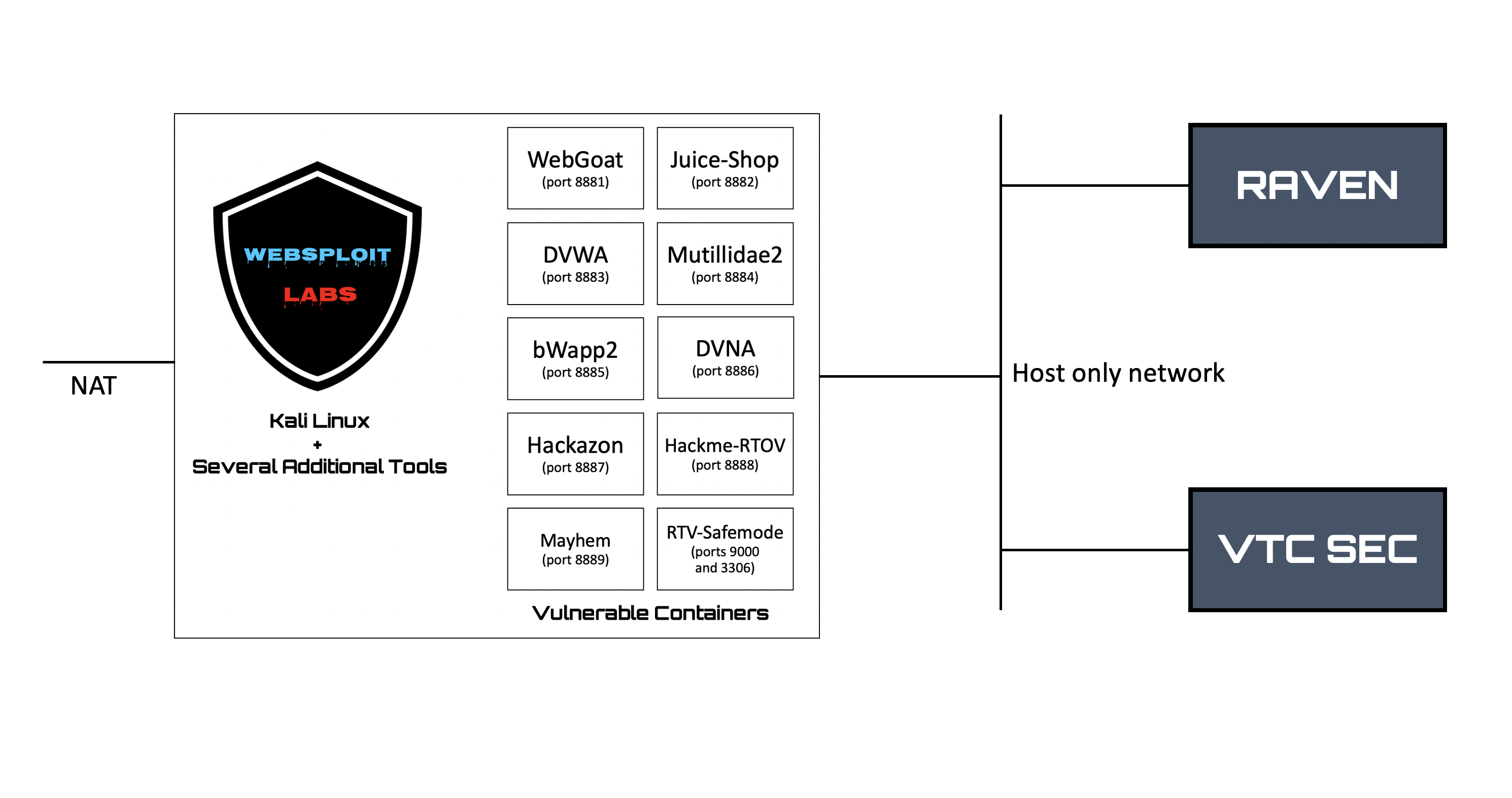
The diagram below shows the lab architecture with WebSploit Full version, Raven, and VTCSEC. The VMs were created in Virtual Box. It is highly recommended that you use Virtual Box. However, if you are familiar with different virtualization platforms, you should be able to run the VMs in VMWare Workstation Pro (Windows), VMWare Fusion (Mac), or vSphere Hypervisor (free ESXi server).
You should create a VM-only network to deploy your vulnerable VMs and perform several of the attacks using WebSploit (Kali Linux), as shown in the video above. You can configure a separate network interface in your WebSploit VM to connect to the rest of your network and subsequently the Internet. Preferably, that interface should be in NAT mode.
Stay in Touch with Omar!