It allows for the observation of neural interactions across widely distributed cortical areas, which was previously challenging due to FOV limitations.
It achieves cellular resolution across an ultra-large FOV exceeding 50 mm².
Experiments have shown its capability to study both morphology (structural) and neuronal activity (functional) in mouse brains. 4. Implementation and Data Handling
Capable of visualizing neuronal activity across a spatial range of over 7 mm. 2. Components of the Adaptive System
Utilizes a deformable mirror to correct for system-level nonlinearities and optical aberrations, enabling sharp imaging across the entire 50 mm² area.
It allows researchers to visualize brain structures spanning from superficial layers down to 900 μm depth in a single study.
The system described in the 2026 publications (often referred to as the ULTRA system) provides an unprecedented combination of field-of-view (FOV) and depth. Multi-scale in vivo neuronal imaging.
Custom-written software, frequently using LabVIEW 2020 (National Instruments).
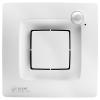 Бытовые вытяжные вентиляторы
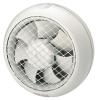 Вентиляторы для оконно-настенной установки
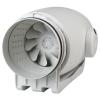 Канальные вентиляторы
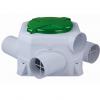 Мультизональные вытяжные вентиляторы
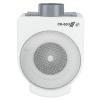 Бытовые кухонные вентиляторы
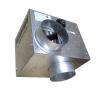 Вентиляторы для распределения теплого воздуха
 Бытовые вентиляторы
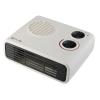 Обогреватели и конвекторы
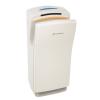 Фены и сушилки для рук
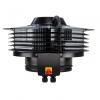 Крышные вентиляторы
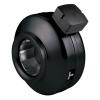 Вентиляторы с EC-двигателями
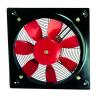 Осевые вентиляторы с монтажной пластиной
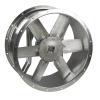 Осевые вентиляторы в цилиндрическом корпусе
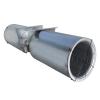 Струйные вентиляторы
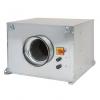 Вентиляторы в корпусе
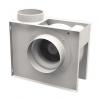 Центробежные вентиляторы
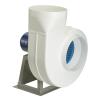 Пластиковы центробежные вентиляторы
 Воздушные завесы и тепловентиляторы
 Приточные установки
 Приточно-вытяжные установки